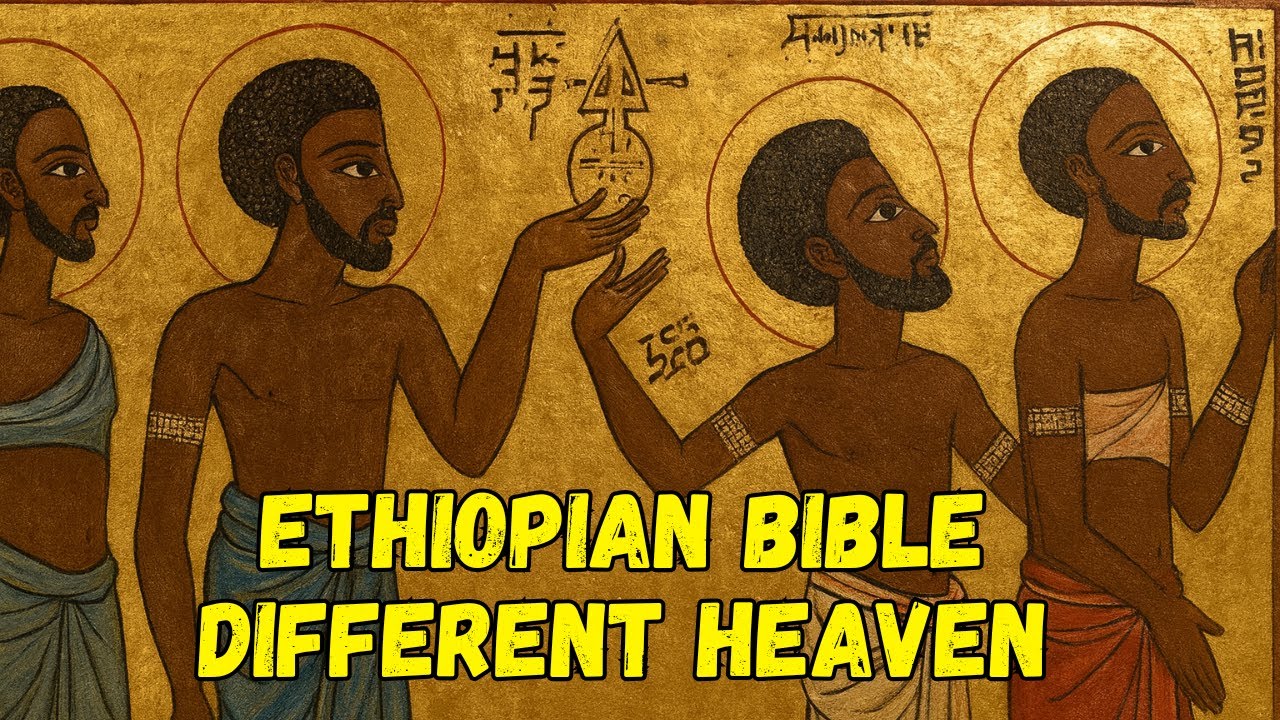
The Ethiopian Bible, which contains 81 books (compared to the Western 66), preserves a vision of the afterlife and divine presence that remains largely untouched by the specific theological shifts of Rome and the European Renaissance [04:19].
Based on the research presented in the video, here is an analysis of how the Ethiopian tradition describes Heaven and why it differs so significantly from Western perspectives:
1. Heaven as “Earth Healed” rather than “Escape”
In Western theology, Heaven is often depicted as a distant, celestial kingdom—a “ladder out of the dust” [08:16]. In contrast, the Ethiopian tradition views Heaven as creation transfigured.
- Horizontal Nearness: Heaven is not “above” the clouds but “beside” and “around” us, woven through the world we walk daily [01:14].
- Restoration: It is described not as a golden palace, but as a “valley of living green” and “rivers that remember your name” [01:31]. It is this world healed and restored, rather than discarded [09:28].
2. The Seven Layered Heavens
The Ethiopian Bible describes an ascending journey through seven distinct realms, each representing a deeper stage of spiritual awakening [13:20]:
- Sakai: A “garden of relief” where the soul experiences the initial release from earthly weight [13:46].
- Cayama: A place of cleansing and healing for the soul’s wounds, notably described as “cleansing without cruelty” or terror [14:53].
- Malt: A treasury of wisdom where all unresolved questions and doubts are met with understanding [15:28].
- Baron: A realm of absolute honesty and “light without shadows” [16:09].
- Mayos: The level where the human will merges with the divine will, ending all inner conflict [16:55].
- Zeales: The realm of “primordial sound,” where reality is experienced as the vibration/music that holds galaxies together [17:39].
- Ara: The final threshold, a brink where the soul stands as near to the Creator as possible without losing its identity [18:12].
3. The Nature of Angels and God
The Ethiopian perspective shifts the focus from physical forms to divine presence:
- Angels: Instead of winged, feathered humans, angels are “shimmering presences” or “intensity.” They are manifestations of God’s communication rather than separate biological-style beings [10:10].
- God’s Presence: God is not an “emperor on a far-off throne” but a presence that “saturates the landscape” [11:36]. Heaven is described as the moment we finally heal the “blindness” that prevents us from seeing God already walking among us [12:07].
4. Why the Difference Exists
- Geographical Influence: Living in high plateaus where clouds often sit below the peaks, Ethiopian theology reflects a world where the “sky is level with your life” [24:52].
- Cultural Independence: Because Ethiopia was never fully colonized, its sacred imagination was not rewritten by foreign empires or the Council of Chalcedon in the same way as Western traditions [02:25].
- Communal Focus: Ethiopian life is deeply communal; thus, salvation is viewed as a “collective healing” of a people and their land, rather than just an individual’s private contract with God [31:20].
In summary, the Ethiopian Bible suggests that the real distance between humanity and Heaven is not measured in miles or height, but in perception and likeness [21:00].
Leave a Reply